How to Start a Food Truck Business
A food truck is one of the most accessible ways into the restaurant business: no lease on a dining room, a small menu, and the freedom to go where the customers are. It is also a real kitchen on wheels, with health permits, a commissary, propane, and a schedule that lives or dies on location.
Get your food truck planFree numbers first · $49 for the full planThis guide walks through the decisions in the order you will meet them, using federal data on the trucks already operating and the same cost model that powers our plans.
The food truck industry in numbers
How to start a food truck, step by step
Pick a concept people can order in ten seconds
The best truck menus are short. Choose a cuisine and a time of day you can own — breakfast for office parks, late night near bars, lunch at industrial parks — and build five to eight items around it. A short menu keeps the line moving and food waste low.
Test demand before you buy a truck
Cook your menu at a farmers market stall, a pop-up or a catering job first. Count orders per hour and the average ticket. Those two numbers drive every projection in your plan.
Learn your city’s and county’s rules
Food trucks are licensed by health departments — county, city or state, depending on where you are — and often need a fire inspection, a commissary agreement and permission for each place you park. Call the health department before you spend money; ask what plan review they require for the truck itself.
Find a commissary
Most jurisdictions require a licensed home base where you prep food, store supplies, get fresh water and dump grey water. Commissary rent is one of your biggest fixed costs, so compare a few.
Buy or build the truck
A used truck with a recent build-out is the fastest path; a custom build gives you the exact layout but takes longer. Have the kitchen, generator, refrigeration and fire suppression inspected before you pay. This single purchase is most of your startup budget.
Write the plan and line up money
Put your concept, local market, costs and three-year projection on paper before you borrow. Lenders want to see your own cash in, a realistic ramp in year one and a working-capital reserve.
Register the business and get insured
Form your business entity, get a federal EIN, register for sales tax with your state, and buy general liability, commercial auto and (once you hire) workers compensation insurance.
Lock in your first locations
Office parks, breweries, apartment complexes and events often welcome a regular truck. Get permission in writing and keep a weekly schedule your customers can rely on.
Launch, then track two numbers every day
Orders and average ticket tell you whether you are on track for break-even. Adjust stops, hours and menu in the first three months rather than waiting for the year-end numbers.
What it costs to open
Our worked example comes to $113,916; real budgets typically run $70,000–$218,000. Each line shows the range we found in published prices and cost data — see every source. Replace each with your own quotes in the calculator below.
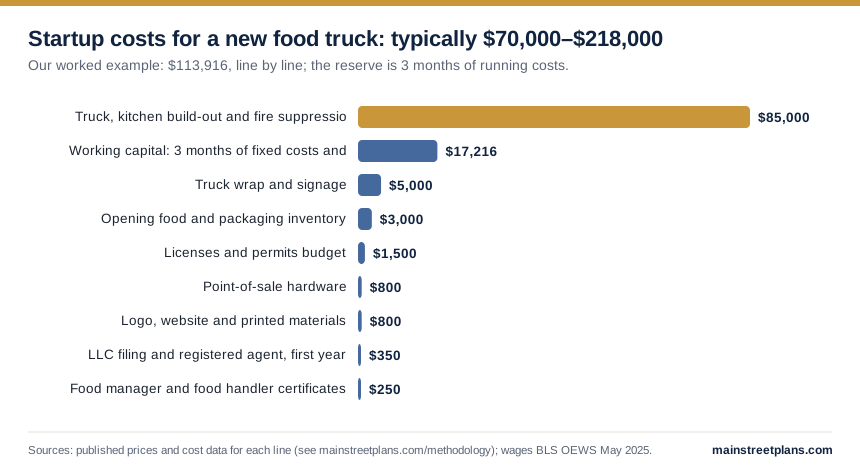
| Item | Our example | Typical range |
|---|---|---|
| Truck, kitchen build-out and fire suppression | $85,000 | $50,000–$175,000 |
| Opening food and packaging inventory | $3,000 | $1,500–$5,000 |
| Point-of-sale hardware | $800 | $299–$899 |
| Truck wrap and signage | $5,000 | $3,500–$8,500 |
| Food manager and food handler certificates | $250 | $100–$500 |
| LLC filing and registered agent, first year | $350 | $134–$749 |
| Licenses and permits budget (confirm with your city and county) | $1,500 | $1,250–$1,502 |
| Logo, website and printed materials | $800 | $238–$1,038 |
| Working capital: 3 months of fixed costs and wages | $17,216 | computed |
| Total to open | $113,916 | $70,000–$218,000 |
Running costs and break-even
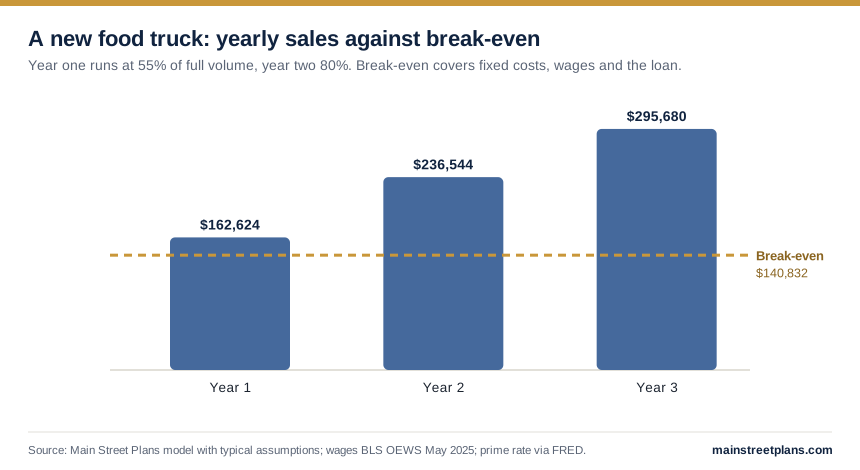
With these assumptions, costs that rise with sales take about 35% of revenue, and fixed costs, wages and an example loan payment come to $7,629 a month. That puts break-even at about $11,736 in monthly sales — roughly 38.1 orders per working day.
| Fixed monthly cost | Typical |
|---|---|
| Commissary (central prep and parking) | $900 |
| Fuel and propane | $650 |
| Insurance (liability, auto, workers comp) | $325 |
| Marketing and event fees | $300 |
| Phone, POS and software | $150 |
Licenses and permits to line up
Requirements and fees differ by state, county and city. Confirm each item with your local offices before you sign a lease or buy equipment.
- Mobile food vendor permit or license (health department — county, city or state, depending on where you operate)
- Fire safety inspection for cooking equipment and propane
- Commissary agreement (most health departments require a licensed home base)
- Food manager certification and food handler cards for staff
- Sales tax permit from your state revenue department
- Business registration with your Secretary of State, plus a federal EIN
- Commercial auto and general liability insurance
- Location permissions: private-property agreements or city street-vending rules
Where food trucks are concentrated
States ranked by employer food trucks per 100,000 residents (2023). A high count means proven demand — and more competition for the best locations and customers.
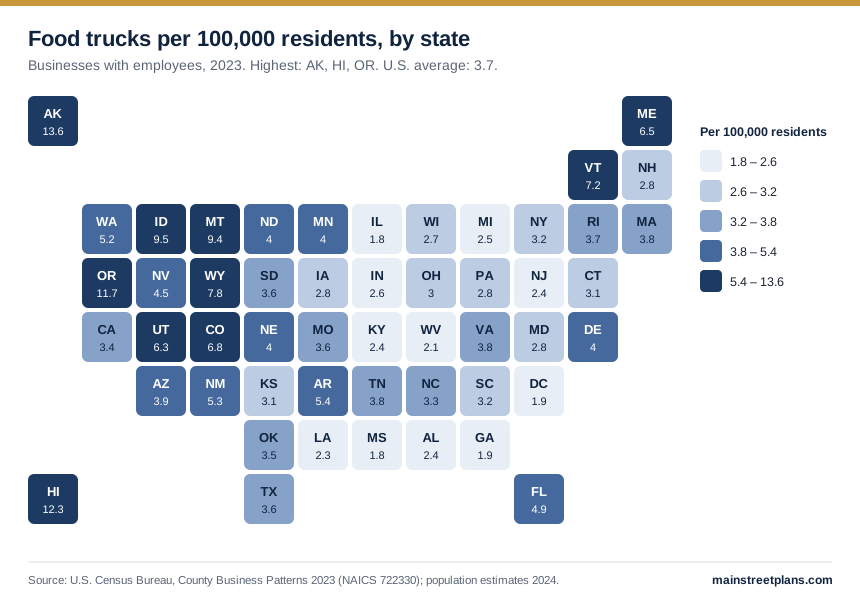
| State | Businesses | Per 100k | Avg. sales | Wage / hr |
|---|---|---|---|---|
| 1. Alaska | 101 | 13.6 | $261,300 | $20.08 |
| 2. Hawaii | 178 | 12.3 | $462,411 | $22.64 |
| 3. Oregon | 498 | 11.7 | $306,717 | $21.22 |
| 4. Idaho | 191 | 9.5 | $189,516 | $17.77 |
| 5. Montana | 107 | 9.4 | $139,345 | $18.74 |
| 6. Wyoming | 46 | 7.8 | $160,474 | $18.24 |
| 7. Vermont | 47 | 7.2 | $173,795 | $21.00 |
| 8. Colorado | 407 | 6.8 | $288,728 | $20.37 |
| 9. Maine | 92 | 6.5 | $191,938 | $21.75 |
| 10. Utah | 220 | 6.3 | $226,211 | $17.95 |
| 11. Arkansas | 166 | 5.4 | $215,089 | $15.22 |
| 12. New Mexico | 112 | 5.3 | $203,840 | $16.86 |
Show all 51 states
| State | Businesses | Per 100k | Avg. sales | Wage / hr |
|---|---|---|---|---|
| 1. Alaska | 101 | 13.6 | $261,300 | $20.08 |
| 2. Hawaii | 178 | 12.3 | $462,411 | $22.64 |
| 3. Oregon | 498 | 11.7 | $306,717 | $21.22 |
| 4. Idaho | 191 | 9.5 | $189,516 | $17.77 |
| 5. Montana | 107 | 9.4 | $139,345 | $18.74 |
| 6. Wyoming | 46 | 7.8 | $160,474 | $18.24 |
| 7. Vermont | 47 | 7.2 | $173,795 | $21.00 |
| 8. Colorado | 407 | 6.8 | $288,728 | $20.37 |
| 9. Maine | 92 | 6.5 | $191,938 | $21.75 |
| 10. Utah | 220 | 6.3 | $226,211 | $17.95 |
| 11. Arkansas | 166 | 5.4 | $215,089 | $15.22 |
| 12. New Mexico | 112 | 5.3 | $203,840 | $16.86 |
| 13. Washington | 411 | 5.2 | $300,483 | $22.69 |
| 14. Florida | 1,151 | 4.9 | $284,804 | $18.42 |
| 15. Nevada | 147 | 4.5 | $289,378 | $20.26 |
| 16. Delaware | 42 | 4 | $238,800 | $18.84 |
| 17. Minnesota | 233 | 4 | $270,661 | $19.33 |
| 18. Nebraska | 81 | 4 | $223,981 | $17.88 |
| 19. North Dakota | 32 | 4 | $253,083 | $17.64 |
| 20. Arizona | 297 | 3.9 | $384,895 | $19.27 |
| 21. Massachusetts | 274 | 3.8 | $351,166 | $21.85 |
| 22. Tennessee | 274 | 3.8 | $317,583 | $17.56 |
| 23. Virginia | 339 | 3.8 | $244,735 | $18.36 |
| 24. Rhode Island | 41 | 3.7 | $178,409 | $19.37 |
| 25. Missouri | 224 | 3.6 | $236,401 | $18.49 |
| 26. South Dakota | 33 | 3.6 | $159,423 | $17.66 |
| 27. Texas | 1,140 | 3.6 | $312,382 | $16.04 |
| 28. Oklahoma | 144 | 3.5 | $225,869 | $16.31 |
| 29. California | 1,329 | 3.4 | $473,704 | $21.65 |
| 30. North Carolina | 367 | 3.3 | $217,456 | $16.90 |
| 31. New York | 632 | 3.2 | $289,075 | $20.75 |
| 32. South Carolina | 177 | 3.2 | $212,207 | $17.12 |
| 33. Kansas | 93 | 3.1 | $171,842 | $16.78 |
| 34. Connecticut | 114 | 3.1 | $325,678 | $20.25 |
| 35. Ohio | 359 | 3 | $309,591 | $16.96 |
| 36. Iowa | 91 | 2.8 | $133,355 | $17.16 |
| 37. Maryland | 178 | 2.8 | $298,804 | $19.29 |
| 38. New Hampshire | 39 | 2.8 | $163,750 | $20.19 |
| 39. Pennsylvania | 363 | 2.8 | $258,476 | $17.19 |
| 40. Wisconsin | 161 | 2.7 | $177,402 | $17.64 |
| 41. Indiana | 179 | 2.6 | $239,427 | $16.42 |
| 42. Michigan | 251 | 2.5 | $219,251 | $18.06 |
| 43. Kentucky | 111 | 2.4 | $178,161 | $16.20 |
| 44. New Jersey | 232 | 2.4 | $317,878 | $19.60 |
| 45. Alabama | 126 | 2.4 | $239,088 | $15.87 |
| 46. Louisiana | 107 | 2.3 | $241,255 | $14.73 |
| 47. West Virginia | 38 | 2.1 | $170,846 | $14.88 |
| 48. District of Columbia | 13 | 1.9 | $344,077 | $21.91 |
| 49. Georgia | 216 | 1.9 | $358,983 | $16.56 |
| 50. Illinois | 229 | 1.8 | $264,226 | $19.00 |
| 51. Mississippi | 54 | 1.8 | $197,444 | $14.31 |
“—” means the Census Bureau did not publish the figure for that state, usually to protect the confidentiality of individual businesses.
Run the numbers for your town
Pick your city to see local competitors, average sales and wages, and your own startup cost and break-even.
Questions
How much does it cost to start a food truck?
With typical starting assumptions, opening a food truck comes to about $113,916, including a cash reserve for your first months. The truck and kitchen build-out is the largest line; a used truck can cut that sharply. Enter your own quotes in the calculator for your number.
How much does a food truck make?
Food truck businesses with employees averaged $297,317 in yearly sales in the 2022 Economic Census, with about 2.9 employees each. A new truck usually takes a year or more to build a following.
How many food trucks are there in the U.S.?
The Census Bureau counted 12,487 food truck businesses with employees in 2023, up 61% from 2019. Many more operate as one-person businesses without employees.
Do I need a commissary?
In most places, yes. Health departments usually require a licensed commissary for prep, storage, water and cleaning. Ask your local health department what it accepts before you sign anything.
Do I need a business plan for a food truck?
If you are borrowing money, leasing a truck or applying to events, yes — lenders and organizers want to see your costs, your market and how you will break even. Even if you self-fund, a plan tells you how many orders a day you need.
Related
Main Street Plans is not affiliated with the SBA or any government agency. This guide is general information, not legal or tax advice.
Sources
- U.S. Census Bureau, County Business Patterns 2023 and 2019 — NAICS 722330 (Mobile Food Services).
- U.S. Census Bureau, 2022 Economic Census — receipts, payroll and employment, NAICS 722330.
- U.S. Bureau of Labor Statistics, Occupational Employment and Wage Statistics, May 2025 — Cooks, Restaurant.
- U.S. Census Bureau, population estimates (2024).
- Federal Reserve, bank prime loan rate (via FRED), for the example loan.
Figures are computed by Main Street Plans from the published federal files listed above. See how we build our numbers.