How to Start a Vending Machine Business
A vending business can start small — a few machines — and grow one placement at a time. It runs on good locations, the right product mix and a reliable restocking route, and it can be managed alongside another job at first.
Get your vending machine business planFree numbers first · $49 for the full planHere are the steps to start, with federal data on vending operators and the same cost model our plans use.
The vending machine business industry in numbers
Businesses with employees in this Census category average $2,498,200 a year, but the category includes large vending and micro-market operators, so it is not a target for a new small business.
How to start a vending machine business, step by step
Decide what you will sell
Snacks and drinks are the classic mix; healthy options, fresh food and specialty items can earn more in the right places but bring more rules and spoilage. Start with what your first locations want.
Find locations before you buy machines
Offices, gyms, apartment buildings, auto shops and schools are common placements. Ask about foot traffic and hours, and agree the commission and term in writing.
Buy machines that take cards
Most customers expect to tap a card or phone. Used machines with cashless readers can lower startup costs; telemetry that reports sales helps you restock efficiently.
Register and check vending rules
Form your business entity, get a federal EIN and register for sales tax. Some states, counties or cities require vending licenses or decals, and selling fresh food can require health registration.
Write the plan
Your plan shows weekly sales per machine, how many machines you need to break even, and when to add more.
Set a restocking route
Group machines geographically and restock based on sales data, not a fixed calendar. Your route is your main ongoing cost after products.
Grow placement by placement
Reinvest profits into machines at proven location types, and drop placements that do not pay their way after a fair trial.
What it costs to open
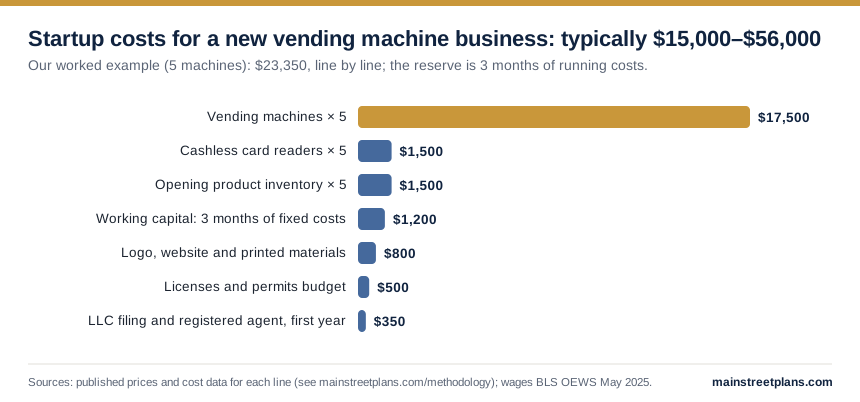
Our worked example, for 5 machines, comes to $23,350; real budgets typically run $15,000–$56,000. Each line shows the range we found in published prices and cost data — see every source. Replace each with your own quotes in the calculator below.
| Item | Our example | Typical range |
|---|---|---|
| Vending machines × 5 | $17,500 | $2,200–$8,600 each |
| Cashless card readers × 5 | $1,500 | $289–$399 each |
| Opening product inventory × 5 | $1,500 | $150–$1,500 each |
| LLC filing and registered agent, first year | $350 | $134–$749 |
| Licenses and permits budget (confirm with your city and county) | $500 | $59–$500 |
| Logo, website and printed materials | $800 | $238–$1,038 |
| Working capital: 3 months of fixed costs | $1,200 | computed |
| Total to open | $23,350 | $15,000–$56,000 |
Running costs and break-even
With these assumptions, costs that rise with sales take about 60% of revenue, and fixed costs and an example loan payment come to $647 a month. That puts break-even at about $1,617 in monthly sales — roughly 5 machines.
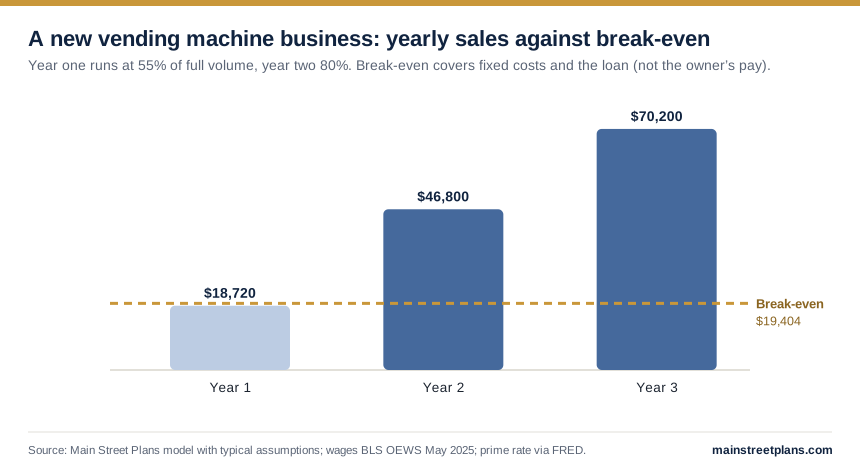
This example is an owner-only business, so break-even covers the business’s costs but not your own pay. Add what you need to live on to see when it supports you — the break-even calculator does both.
| Fixed monthly cost | Typical |
|---|---|
| Fuel and vehicle costs for restocking | $250 |
| Insurance | $100 |
| Cashless reader service fee (per machine, per month) | $10 / machine |
Licenses and permits to line up
Requirements and fees differ by state, county and city. Confirm each item with your local offices before you sign a lease or buy equipment.
- Business registration with your Secretary of State, plus a federal EIN
- Sales tax permit — vending sales are taxable in most states, often with special rules
- Vending license or decals where your state, county or city requires them
- Food-vending registration if you sell perishable or fresh food
- Written placement agreements with each location (commission, access, term)
- General liability insurance (locations usually ask for a certificate)
Where vending machine operators are concentrated
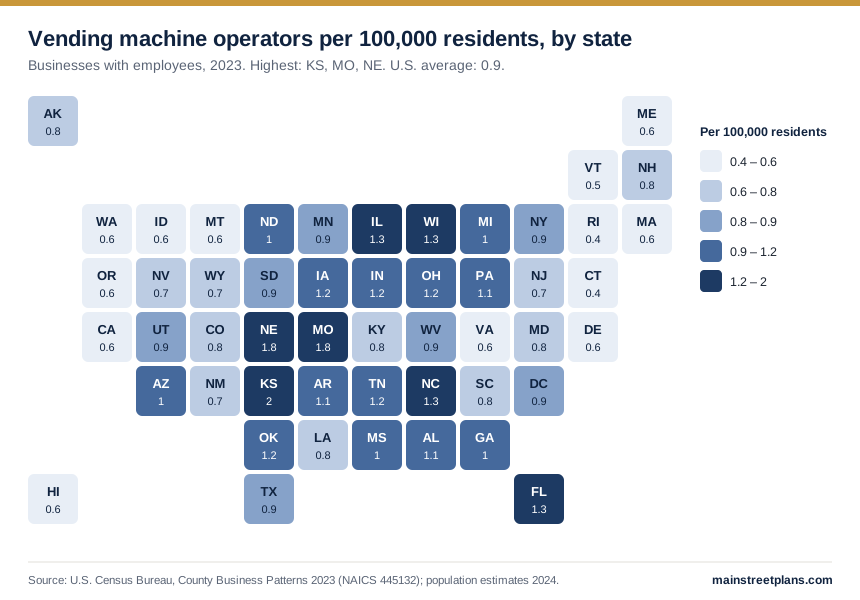
States ranked by employer vending machine operators per 100,000 residents (2023). A high count means proven demand — and more competition for the best locations and customers.
| State | Businesses | Per 100k | Self-employed avg. | Wage / hr |
|---|---|---|---|---|
| 1. Kansas | 58 | 2 | $42,551 | $22.18 |
| 2. Missouri | 111 | 1.8 | $35,529 | $21.32 |
| 3. Nebraska | 36 | 1.8 | $32,211 | $22.90 |
| 4. Florida | 305 | 1.3 | $30,513 | $23.77 |
| 5. Illinois | 163 | 1.3 | $34,456 | $22.13 |
| 6. North Carolina | 140 | 1.3 | $34,172 | $21.85 |
| 7. Wisconsin | 75 | 1.3 | $41,064 | $25.75 |
| 8. Indiana | 85 | 1.2 | $39,436 | $21.48 |
| 9. Iowa | 40 | 1.2 | $31,415 | $23.68 |
| 10. Ohio | 140 | 1.2 | $31,521 | $19.86 |
| 11. Oklahoma | 51 | 1.2 | $33,804 | $22.32 |
| 12. Tennessee | 86 | 1.2 | $45,450 | $24.69 |
Show all 51 states
| State | Businesses | Per 100k | Self-employed avg. | Wage / hr |
|---|---|---|---|---|
| 1. Kansas | 58 | 2 | $42,551 | $22.18 |
| 2. Missouri | 111 | 1.8 | $35,529 | $21.32 |
| 3. Nebraska | 36 | 1.8 | $32,211 | $22.90 |
| 4. Florida | 305 | 1.3 | $30,513 | $23.77 |
| 5. Illinois | 163 | 1.3 | $34,456 | $22.13 |
| 6. North Carolina | 140 | 1.3 | $34,172 | $21.85 |
| 7. Wisconsin | 75 | 1.3 | $41,064 | $25.75 |
| 8. Indiana | 85 | 1.2 | $39,436 | $21.48 |
| 9. Iowa | 40 | 1.2 | $31,415 | $23.68 |
| 10. Ohio | 140 | 1.2 | $31,521 | $19.86 |
| 11. Oklahoma | 51 | 1.2 | $33,804 | $22.32 |
| 12. Tennessee | 86 | 1.2 | $45,450 | $24.69 |
| 13. Pennsylvania | 145 | 1.1 | $33,068 | $22.98 |
| 14. Alabama | 59 | 1.1 | $38,103 | $19.81 |
| 15. Arkansas | 35 | 1.1 | $37,403 | $21.95 |
| 16. Georgia | 109 | 1 | $30,280 | $22.94 |
| 17. Michigan | 99 | 1 | $27,972 | $23.21 |
| 18. Mississippi | 30 | 1 | $40,097 | $20.21 |
| 19. North Dakota | 8 | 1 | $41,980 | $24.75 |
| 20. Arizona | 76 | 1 | $37,967 | $24.62 |
| 21. District of Columbia | 6 | 0.9 | $19,600 | — |
| 22. Minnesota | 55 | 0.9 | $37,590 | $24.75 |
| 23. New York | 181 | 0.9 | $28,731 | $31.52 |
| 24. South Dakota | 8 | 0.9 | $19,224 | $21.59 |
| 25. Texas | 268 | 0.9 | $33,297 | $24.79 |
| 26. Utah | 31 | 0.9 | $37,611 | $22.97 |
| 27. West Virginia | 16 | 0.9 | $27,654 | $19.71 |
| 28. Kentucky | 38 | 0.8 | $44,306 | $20.74 |
| 29. Louisiana | 37 | 0.8 | $37,559 | $22.88 |
| 30. Maryland | 52 | 0.8 | $28,525 | $25.07 |
| 31. New Hampshire | 11 | 0.8 | $38,771 | $24.98 |
| 32. South Carolina | 43 | 0.8 | $39,481 | $21.56 |
| 33. Alaska | 6 | 0.8 | $29,774 | $25.44 |
| 34. Colorado | 45 | 0.8 | $41,690 | $21.78 |
| 35. Nevada | 23 | 0.7 | $33,683 | $25.65 |
| 36. New Jersey | 71 | 0.7 | $32,746 | $29.23 |
| 37. New Mexico | 14 | 0.7 | $37,459 | $21.19 |
| 38. Wyoming | 4 | 0.7 | $22,283 | $24.18 |
| 39. Delaware | 6 | 0.6 | $23,344 | $23.19 |
| 40. Hawaii | 9 | 0.6 | $42,290 | — |
| 41. Idaho | 13 | 0.6 | $37,579 | $20.72 |
| 42. Maine | 9 | 0.6 | $30,055 | $24.57 |
| 43. Massachusetts | 46 | 0.6 | $34,473 | $28.96 |
| 44. Montana | 7 | 0.6 | $28,524 | $23.08 |
| 45. Oregon | 27 | 0.6 | $34,068 | $25.73 |
| 46. Virginia | 53 | 0.6 | $27,868 | $21.54 |
| 47. Washington | 46 | 0.6 | $31,509 | $27.18 |
| 48. California | 228 | 0.6 | $34,760 | $24.98 |
| 49. Vermont | 3 | 0.5 | $51,304 | — |
| 50. Rhode Island | 5 | 0.4 | $34,519 | $27.72 |
| 51. Connecticut | 15 | 0.4 | $37,563 | $24.80 |
“—” means the Census Bureau did not publish the figure for that state, usually to protect the confidentiality of individual businesses.
Run the numbers for your town
Pick your city to see local competitors, average sales and wages, and your own startup cost and break-even.
Questions
How much does it cost to start a vending machine business?
With typical starting assumptions for five machines with card readers and opening inventory, opening comes to about $23,350, including a cash reserve. Each additional machine adds its own cost.
How much does a vending machine business make?
Self-employed vending machine operators averaged $33,785 in yearly receipts in the Census Bureau’s 2024 Nonemployer Statistics. What you keep depends on product costs, location commissions and your route.
How many vending operators are there?
The Census Bureau counted 24,152 self-employed vending machine operators in 2024, plus 3,227 vending businesses with employees in 2023.
Do I need a license for vending machines?
Usually a business registration and a sales tax permit; some states, counties and cities also require vending licenses or decals, and fresh food can need health registration.
How many machines do I need to make money?
Your plan’s break-even shows the number of machines that covers your fixed costs at your expected sales per machine.
Related
Main Street Plans is not affiliated with the SBA or any government agency. This guide is general information, not legal or tax advice.
Sources
- U.S. Census Bureau, County Business Patterns 2023 and 2019 — NAICS 445132 (Vending Machine Operators).
- U.S. Census Bureau, 2022 Economic Census — receipts, payroll and employment, NAICS 445132.
- U.S. Census Bureau, Nonemployer Statistics 2024.
- U.S. Bureau of Labor Statistics, Occupational Employment and Wage Statistics, May 2025 — Coin, Vending, and Amusement Machine Servicers and Repairers.
- U.S. Census Bureau, population estimates (2024).
- Federal Reserve, bank prime loan rate (via FRED), for the example loan.
Figures are computed by Main Street Plans from the published federal files listed above. See how we build our numbers.